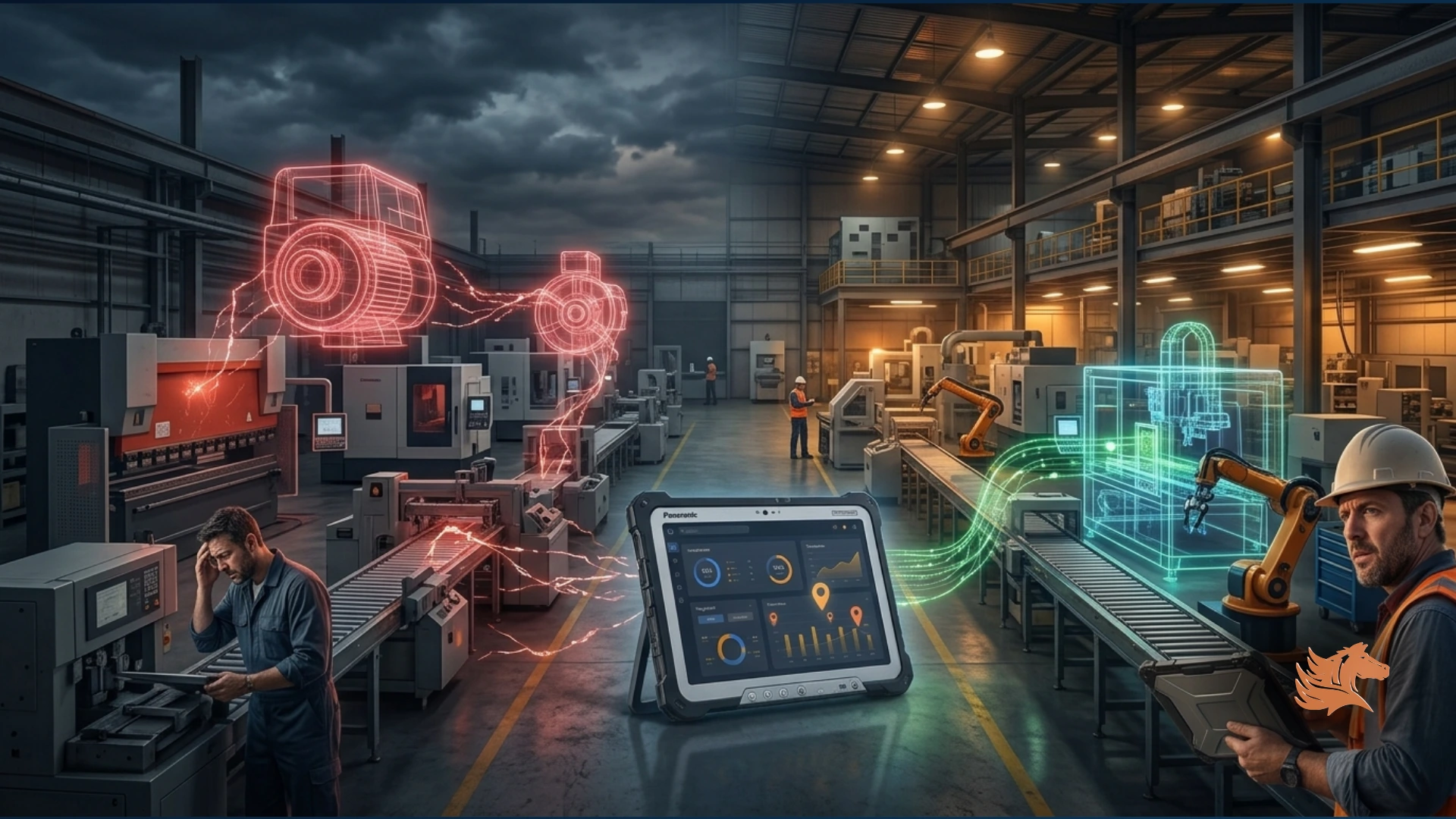
The High Cost of Unplanned Factory Downtime (and How to Eliminate It)
By Poll Ghosh•July 20, 2026
Quick Answer
Unplanned factory downtime costs manufacturers an average of $50,000 to $260,000 per hour, driven by lost production, idle labor, emergency repairs, scrap, and missed delivery commitments. Most of this downtime is preventable because it is often caused by poor visibility into maintenance schedules, warranty status, and equipment history rather than unpredictable mechanical failure. Manufacturers can reduce downtime by shifting to centralized, cloud-based asset management platforms like AssetPegasus that automate preventive maintenance, track warranties, and alert teams before failures happen.
A factory can lose thousands of dollars every minute when a critical machine unexpectedly stops working. Unplanned downtime affects production output, labor utilization, emergency repair costs, product quality, customer commitments, and compliance.
What Does Unplanned Factory Downtime Cost?
Unplanned factory downtime costs manufacturers an average of $50,000 to $260,000 per hour, depending on facility size and industry.
The true cost is not limited to lost production. A shutdown can also create idle labor, emergency repair expenses, scrap and rework, delayed shipments, damaged customer relationships, and compliance exposure.
Workers paid while idle, plus overtime once production restarts
Emergency repairs
Rush parts, premium service fees, expedited freight
Quality loss
Scrap and rework during line restart
Customer trust
Repeated delays can damage long-term contracts
Compliance risk
Missed audit windows and lapsed certifications
Key Takeaway
Downtime cost is more than lost production. It includes labor waste, emergency repair premiums, scrap and rework, customer impact, and compliance exposure.
What Causes Unplanned Downtime in Manufacturing?
Unplanned downtime is rarely a random mechanical surprise. It is often caused by an information gap rather than an equipment defect.
When maintenance schedules, equipment history, warranty information, and plant-level asset data are fragmented, maintenance teams have less visibility into potential failures.
No centralized maintenance history — Technicians rely on memory, spreadsheets, or paper logs instead of a single source of truth.
Missed preventive maintenance windows — Manual scheduling can easily be overlooked during busy production cycles.
Expired warranties and insurance — Equipment can fail immediately after coverage expires, turning a routine repair into an unexpected expense.
Fragmented data across multiple plants — Multi-site manufacturers may not have real-time visibility into equipment status across facilities.
Reactive maintenance culture — Teams repair machines after failure instead of servicing equipment proactively.
How Do You Reduce or Eliminate Unplanned Downtime?
The solution is a shift from reactive repair to predictive, data-driven maintenance.
This requires a centralized system that tracks every machine's health, history, maintenance schedule, warranty status, and lifecycle before failure occurs.
1
Track the Full Machinery Lifecycle
AssetPegasus records every asset's purchase date, service history, location, and condition in one place.
This replaces scattered spreadsheets with a centralized source of truth for machines ranging from CNC equipment to robotics and conveyor systems.
2
Automate Preventive Maintenance Scheduling
Manual maintenance reminders can easily be missed during busy production cycles.
AssetPegasus automates maintenance scheduling so machines can be serviced on schedule before failures stop production.
3
Track Warranty and Insurance Coverage Natively
AssetPegasus includes built-in warranty and insurance tracking.
Maintenance teams can receive proactive alerts before coverage expires, helping keep repair costs more predictable.
4
Get Proactive Alerts Before Failure
AssetPegasus sends automated alerts for upcoming service dates, expiring certifications, and equipment approaching end-of-life.
This gives maintenance teams time to act before a machine becomes a production problem.
5
Manage Multiple Factory Locations
Manufacturers operating multiple plants need centralized visibility into equipment status.
AssetPegasus provides multi-location tracking without requiring local software installations or servers to maintain.
Machine information can be accessed from different locations and devices through a centralized system.
6
Use QR Code and Mobile Tracking on the Floor
Technicians can scan a QR code attached to a machine to quickly access its asset history and record maintenance activity.
This reduces the time technicians spend searching through paper records or spreadsheets during repairs.
Predictive vs. Reactive Maintenance: What Changes?
Reactive Maintenance
Predictive Maintenance (AssetPegasus)
Machine fails
Scheduled before failure risk rises
High cost from emergency repairs and rush parts
Lower and more predictable maintenance costs
Unplanned and unpredictable downtime
Scheduled maintenance windows
Manual logs and spreadsheets
Centralized cloud dashboard
Reactive audit preparation
Continuous, audit-ready records
Key Takeaway
Predictive maintenance converts unplanned downtime into scheduled, budgeted maintenance windows, making it one of the most important levers for reducing factory downtime costs.
7
Stay Audit-Ready with Compliant Data Handling
AssetPegasus is designed with GDPR- and HIPAA-aligned data practices to help regulated manufacturing environments maintain organized and audit-ready asset information.
8
Cut Costs Through Better Visibility
Manufacturers using centralized asset management platforms like AssetPegasus commonly report reducing operational and IT-related costs by up to 40%.
Potential savings can come from eliminating redundant equipment, avoiding emergency repairs, and extending machine lifespan through consistent servicing.
Conclusion
Unplanned downtime does not have to be an unavoidable cost of manufacturing. With centralized asset data, proactive maintenance scheduling, warranty tracking, QR-based asset identification, and predictive maintenance practices, manufacturers can identify risks earlier and keep critical equipment running.
Frequently Asked Questions
Ready to reduce unplanned factory downtime?
Start a free 30-day trial with AssetPegasus and identify your maintenance gaps before they cause another shutdown.
Share this article
More from our Blog
Ghost Assets on Construction Sites: How Moving Machinery Unnoticed Drains Profitability
By Sourav Das•July 2026
Why Restaurants Pay Twice for Equipment Repairs (and How Warranty Tracking Saves Capital)
By Anuj Das•July 2026
How Fleet Owners Avoid Overpaying for Repairs with Integrated Policy & Warranty Management