HomeAbout
ContactPricingBlog
Logistics & Transport Asset Management

How Fleet Owners Avoid Overpaying for Repairs with Integrated Policy & Warranty Management

By Sourav DasJuly 2026
How Fleet Owners Avoid Overpaying for Repairs with Integrated Policy & Warranty Management

Quick Answer

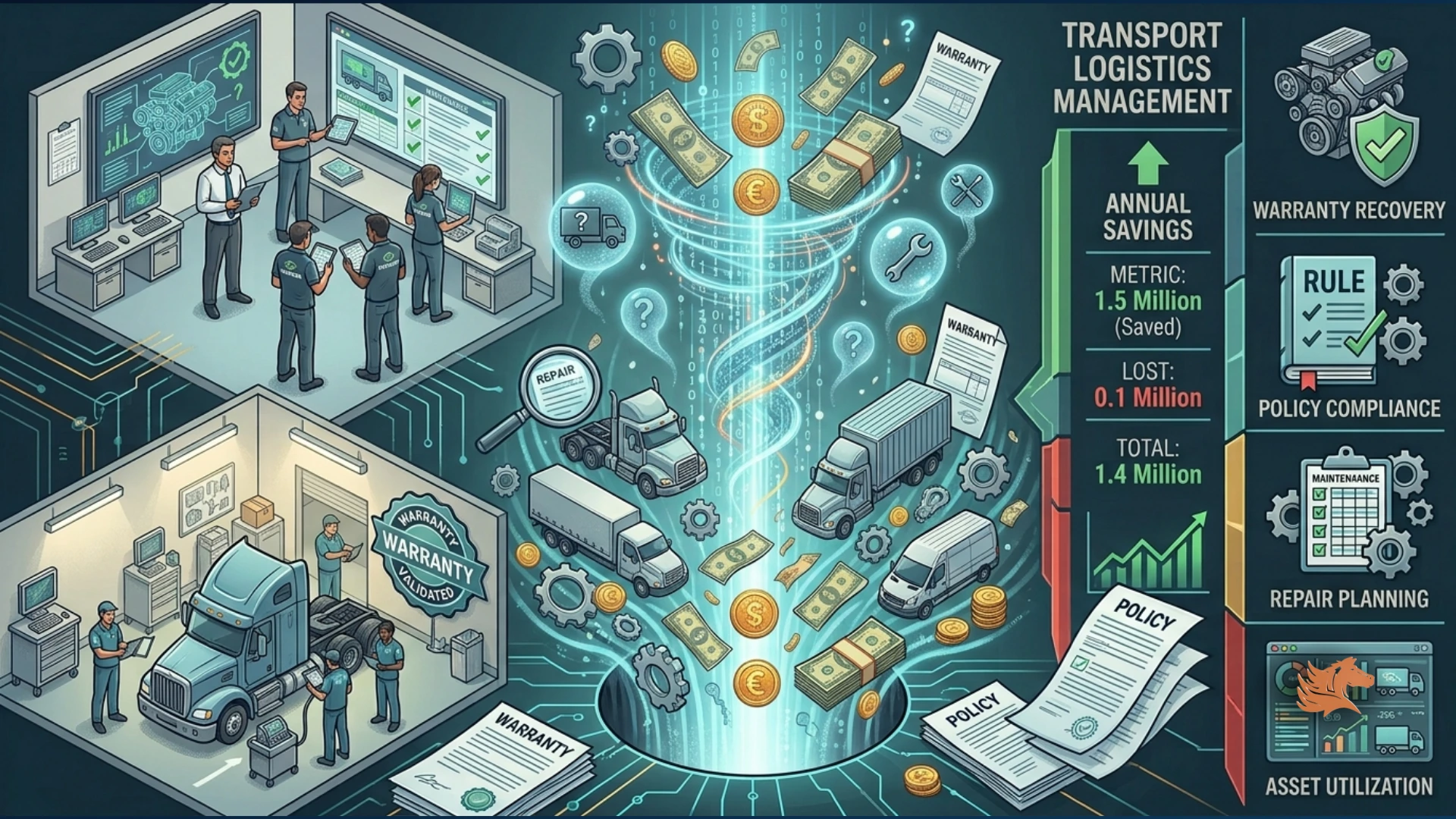
Fleet owners overpay for repairs when vehicle warranty and insurance policy data are disconnected from day-to-day maintenance decisions. A driver reports a mechanical issue, the fleet manager sends the vehicle to the nearest shop, and the invoice gets paid — often without anyone checking whether the repair, part, or component was still covered under a manufacturer warranty, extended service contract, or insurance policy. Integrated policy and warranty management software solves this by linking every vehicle's coverage status directly to its maintenance record, so fleet managers can verify coverage before authorizing a single repair, not after the invoice has already been paid.

Why Do Fleet Owners Overpay for Repairs?

Fleet repair overspend rarely comes from bad negotiating with repair shops. It comes from a structural gap between where coverage information lives and where repair decisions get made.

The most common causes include:

Warranty data lives outside the maintenance workflow

Purchase records, extended warranties, and insurance policies sit in separate files, spreadsheets, or vendor portals that maintenance teams don't check in real time.

Decentralized fleets, decentralized decisions

When vehicles are spread across regions or depots, local managers make repair calls without visibility into national fleet-level coverage.

High vehicle turnover

As fleets add, replace, and retire vehicles, warranty and policy tracking gets outdated fast if it isn't automated.

Component-level coverage gets missed

Warranties often cover specific parts — transmissions, drivetrains, and emissions systems — separately from the vehicle as a whole, and this nuance is easy to lose without a centralized system.

Time pressure drives fast decisions

A down vehicle means lost routes and missed deliveries, so managers authorize repairs quickly rather than pausing to verify coverage.

What Does This Actually Cost a Fleet?

None of these causes are about vehicle condition. They're about information not reaching the person authorizing the repair invoice.

The financial impact scales directly with fleet size, and it compounds quietly over time.

For a fleet running even 50 vehicles, a handful of missed warranty claims per year can quietly cost tens of thousands of dollars — money that should never have left the business.

Cost CategoryImpact
Duplicate paymentRepairs covered under warranty get paid out of pocket anyway
Lapsed coverage repairsWarranties expire unnoticed, converting free repairs into full-cost invoices
Component-level missesCovered parts such as transmissions, engines, and emissions systems get billed as standard repairs
Vehicle downtimeDelayed claims processing extends the time a vehicle is off the road
Administrative overheadStaff hours are spent manually verifying coverage after the fact, if at all
Total cost of ownershipUntracked warranties inflate the real per-vehicle maintenance cost used for budgeting

How Does Integrated Policy & Warranty Management Fix This?

The fix isn't better repair shop negotiation — it's connecting coverage data directly to the maintenance decision point.

This is exactly what a centralized asset management platform like AssetPegasus is built to do for fleet operations.

1. Centralized Warranty and Insurance Records Per Vehicle

AssetPegasus stores every vehicle's warranty terms, insurance policy details, and coverage expiration dates in one system, so any fleet manager can check coverage in seconds before authorizing a repair.

2. Full Vehicle Lifecycle Tracking

Every vehicle gets a complete record — purchase date, service history, current condition, and assigned depot — replacing scattered spreadsheets with a single source of truth across the entire fleet.

3. Proactive Coverage Expiration Alerts

Instead of discovering a lapsed warranty after paying a full-price repair bill, AssetPegasus sends automated alerts before coverage expires, giving fleet managers time to renew, extend, or budget for the change.

4. Automated Preventive Maintenance Scheduling

AssetPegasus automates preventive maintenance scheduling so vehicles are serviced on time under warranty terms, which both keeps coverage valid and reduces breakdown frequency in the first place.

5. Multi-Depot, Cloud-Based Visibility

For fleets spread across multiple depots or regions, AssetPegasus provides a single cloud dashboard showing every vehicle's maintenance status and coverage — no local installs, accessible from any device.

6. QR Code Tracking for Drivers and Technicians

Drivers or technicians can scan a QR code on a vehicle to instantly see its warranty status, service history, and next scheduled maintenance — before a repair shop is ever called.

7. Compliance-Ready Reporting

AssetPegasus is built with GDPR- and HIPAA-aligned data handling, helping fleet operators stay audit-ready for regulatory and insurance reporting requirements.

8. Measurable Reduction in Total Cost of Ownership

Fleet operators using centralized asset management platforms like AssetPegasus commonly report cutting operational and maintenance-related costs by up to 40%, largely by eliminating avoidable out-of-pocket repairs and extending vehicle lifespan.

Disconnected Records vs. Integrated Policy Management

RequirementDisconnected RecordsIntegrated Management
Coverage checkRarely done before repair authorizationVerified before repair is approved
Vehicle visibilityDepot-by-depot, manual trackingCentralized, fleet-wide dashboard
Warranty captureFrequently missed or expired unnoticedTracked with proactive alerts
Maintenance timingReactive, after breakdownScheduled, preventive
Cost predictabilityInconsistent, hard to budgetClear, trackable total cost of ownership

A Simple Checklist for Fleet Owners to Start Cutting Repair Overspend

Fleet owners can start reducing repair overspend by making coverage verification part of the standard maintenance workflow.

  • Consolidate every vehicle's warranty and insurance documents into one system
  • Set expiration alerts for all active warranties and policies before they lapse
  • Require coverage verification as a step before any repair invoice is approved
  • Track component-level warranties separately from whole-vehicle coverage
  • Review fleet-wide maintenance and repair cost data monthly, not annually
  • Standardize this process across every depot, not just headquarters

Conclusion

Start a free 7-day trial with AssetPegasus to map your maintenance gaps before they cause another unplanned shutdown.

Frequently Asked Questions

Start a free 30-day trial with AssetPegasus

Map your maintenance gaps before they cause another unplanned shutdown.

Share this article

More from our Blog

The Hidden Cost of Missing Medical Equipment: How Hospitals Lose Millions to "Ghost Equipment"

The Hidden Cost of Missing Medical Equipment: How Hospitals Lose Millions to "Ghost Equipment"

By Sourav DasJuly 2026

The High Cost of Unplanned Factory Downtime (and How to Eliminate It)

The High Cost of Unplanned Factory Downtime (and How to Eliminate It)

By Poll GhoshJuly 20, 2026

Ghost Assets on Construction Sites: How Moving Machinery Unnoticed Drains Profitability

Ghost Assets on Construction Sites: How Moving Machinery Unnoticed Drains Profitability

By Sourav DasJuly 2026