How Universities Master Grant-Funded Equipment Tracking and Audit Compliance
By Sourav Das•September 5, 2026
Quick Answer
University research asset management is the process of tracking, documenting, and reporting on equipment purchased with grant funds to meet federal compliance rules under 2 CFR Part 200 (Uniform Guidance). Federal rules define equipment as tangible property with a useful life of more than one year and a per-unit acquisition cost of $5,000–$10,000 or more, and require institutions to maintain detailed records — description, serial number, cost, location, and condition — with a physical inventory conducted at least once every two years.
Any non-federal entity, including universities, that spends $750,000 or more in federal awards in a fiscal year must undergo a Single Audit, and asset management is one of the specific areas examined. College lab equipment tracking software solves this by giving research offices a centralized, continuously updated record of every grant-funded asset, replacing manual spreadsheets that are the most common source of audit findings.
Why Is Grant-Funded Equipment Tracking So Strict?
Federal research funding comes with accountability obligations that go well beyond a typical purchase order. The rules exist because equipment bought with public money remains, in a real sense, government-monitored property for its useful life.
Key requirements universities must meet include:
Detailed Asset Records
Institutions must document a description, serial number, purchase date, cost, funding source, location, and condition for every piece of equipment acquired with federal funds.
Recurring Physical Inventories
A physical inventory must be conducted at least once every two years to confirm the equipment still exists and is being used for its intended purpose.
Proper Disposition Tracking
When equipment is retired, sold, or transferred, institutions must document fair market value and maintain a clear audit trail for the disposition decision.
Record Retention Rules
Grant records, including equipment documentation, must generally be retained for at least three years from submission of the final financial report.
Single Audit Exposure
As of October 2025, any institution spending $750,000 or more in federal awards in a fiscal year must undergo a Single Audit — a combined financial and compliance review conducted under Generally Accepted Government Auditing Standards.
What Goes Wrong Without a Centralized System?
Universities typically manage dozens or hundreds of active grants simultaneously, each with its own equipment purchases, funding source, and reporting timeline. Without a centralized system, several predictable problems emerge.
The financial exposure is real: a Single Audit itself is a budgeted cost of $15,000–$40,000 depending on organizational complexity, and findings become part of the public record — reviewed by federal agencies before they approve future awards.
Equipment Gets Attributed to the Wrong Grant
When multiple funding sources support a lab, it becomes easy to miscode which grant paid for which asset — a direct compliance risk under federal cost-allocation rules.
Biennial Physical Inventories Get Missed or Rushed
Manually tracking hundreds of assets across departments makes the mandatory two-year inventory cycle difficult to complete accurately and on time.
Disposition Records Go Undocumented
When equipment is retired or transferred between labs, the paperwork often lags or disappears entirely, creating gaps that surface during an audit.
Federal reviewers commonly cite missing records and poor procurement tracking as top weaknesses found during grant audits.
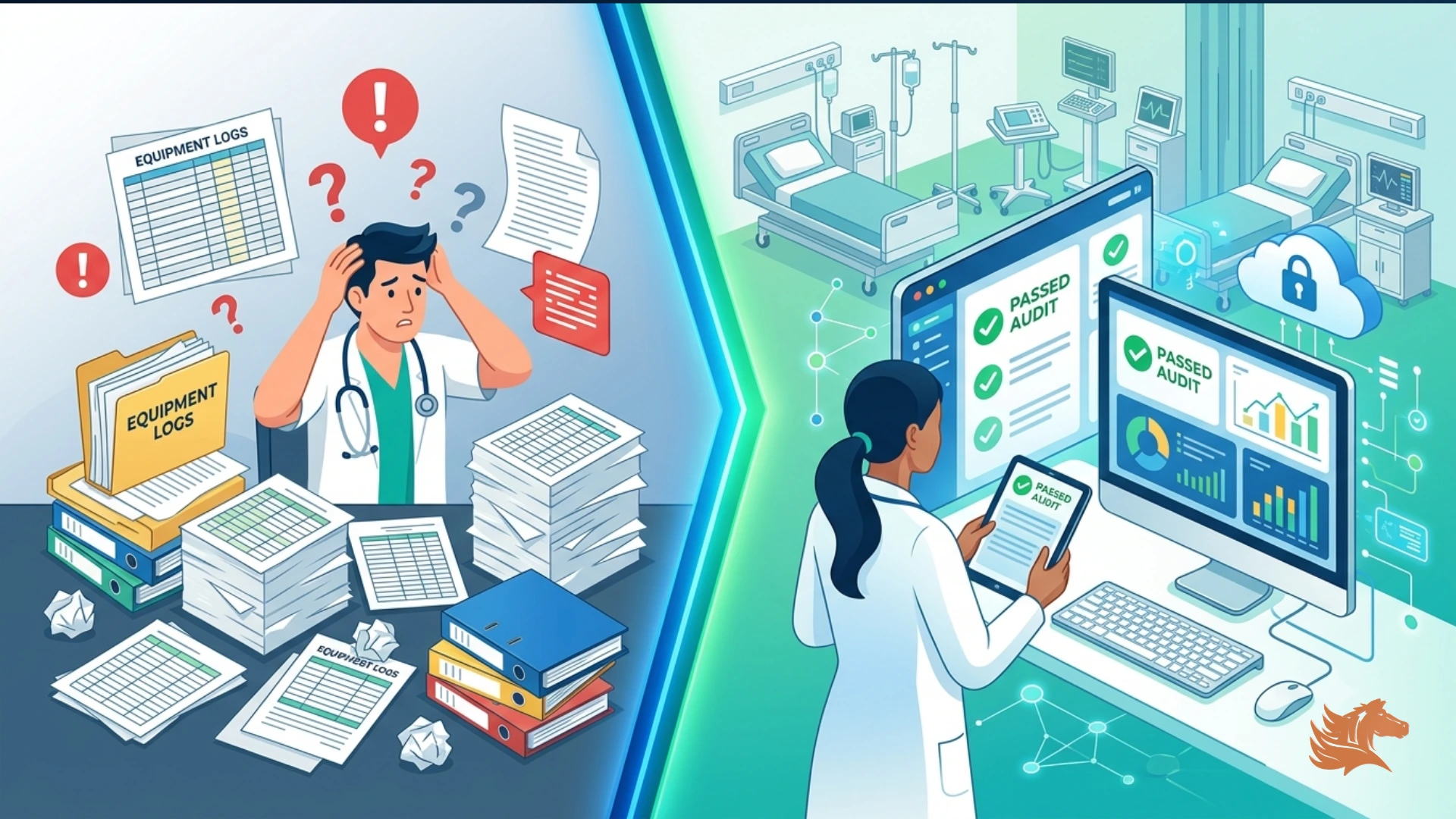
Audit Preparation Becomes a Fire Drill
Instead of pulling a report, research offices scramble across departments to reconstruct equipment histories before an external auditor arrives.
How Do Universities Fix This with Research Asset Management Software?
The solution research offices are increasingly adopting is centralized university research asset management software that ties every grant-funded asset to its funding source, location, condition, and inventory history in one system.
This is exactly the structure a platform like AssetPegasus provides.
1
Full Asset Lifecycle Tracking Tied to Funding Source
AssetPegasus records the full lifecycle of every piece of lab equipment — purchase date, cost, funding source, location, and condition — so research offices can instantly confirm which grant paid for which asset, satisfying core 2 CFR 200 documentation requirements.
2
Automated Physical Inventory Scheduling
Instead of manually coordinating a biennial inventory across dozens of labs and departments, AssetPegasus automates scheduling and tracking of inventory cycles, helping institutions meet the mandatory two-year physical verification requirement without a last-minute scramble.
3
Centralized, Audit-Ready Documentation
Every asset record — description, serial number, condition, and location — is stored in one searchable system, giving research administrators the exact documentation federal reviewers request first during a Single Audit.
4
Disposition Tracking and Audit Trail
AssetPegasus maintains a clear record when equipment is retired, transferred, or disposed of, supporting the fair-market-value documentation and audit trail that federal disposition rules require.
5
Multi-Department, Cloud-Based Visibility
For universities with equipment spread across multiple labs, departments, or campuses, AssetPegasus provides a single cloud dashboard showing asset status and compliance data institution-wide, with no local installs required.
6
QR Code Tracking for Lab Staff
Lab managers and research staff can scan a QR code directly on equipment to instantly verify its funding source, condition, and inventory status — turning a manual inventory walkthrough into a fast, accurate process.
7
Preventive Maintenance Scheduling
AssetPegasus automates preventive maintenance scheduling for research equipment, helping ensure grant-funded instruments remain in proper working condition, which auditors also examine as part of "used appropriately" compliance checks.
8
Warranty and Insurance Tracking
Built-in warranty and insurance tracking helps research offices avoid unnecessary repair costs on equipment still covered, freeing grant funds for their intended research purposes rather than avoidable maintenance expenses.
9
Measurable Cost and Risk Reduction
Institutions using centralized asset management platforms like AssetPegasus commonly report cutting operational and compliance-related costs by up to 40%, largely by avoiding audit findings, missed inventory deadlines, and disposition documentation gaps.
Manual Spreadsheet Tracking vs. Centralized Research Asset Management
Requirement
Manual/Departmental Spreadsheets
Centralized System (AssetPegasus)
Funding source attribution
Error-prone, manually cross-checked
Linked directly to each asset record
Physical inventory
Manually coordinated every two years
Automated scheduling and tracking
Disposition documentation
Frequently incomplete or delayed
Centralized, audit-trail ready
Audit preparation
Reactive scramble across departments
Continuous, exportable documentation
Multi-campus visibility
Fragmented by department
Unified across the institution
Conclusion
Grant-funded equipment does not have to become a recurring compliance headache. With centralized asset records, funding-source tracking, automated physical inventory scheduling, disposition audit trails, QR-based identification, maintenance scheduling, and cloud-based reporting, universities can keep research equipment organized, accountable, and audit-ready.
Master Grant-Funded Equipment Tracking and Audit Compliance
Start a free 30-day trial with AssetPegasus and bring your research equipment records into one centralized, audit-ready system.