Why Restaurants Pay Twice for Equipment Repairs (and How Warranty Tracking Saves Capital)
By Anuj Das•July 2026
Quick Answer
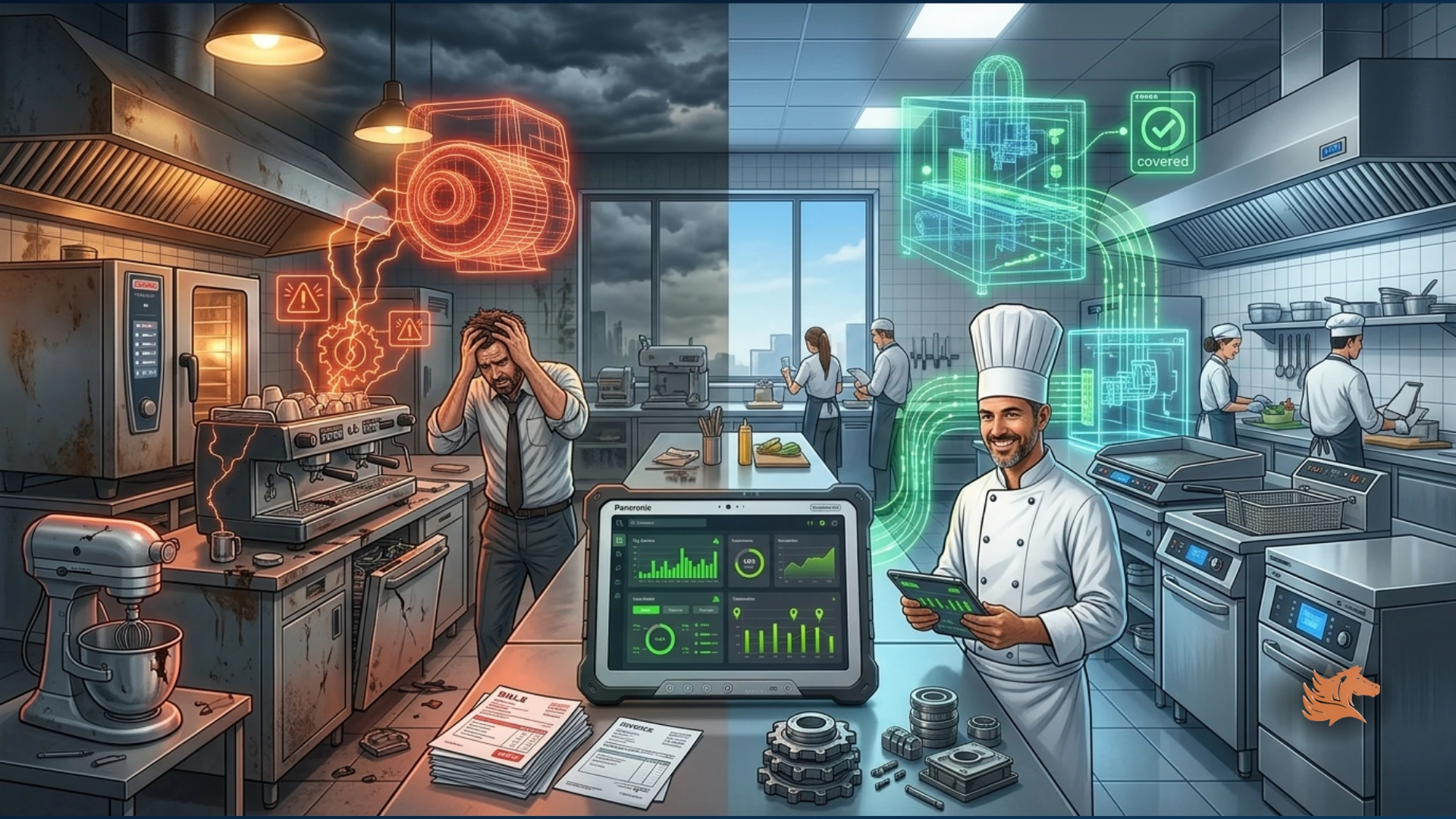
Restaurants routinely pay for equipment repairs that are still covered under warranty because warranty documents are scattered across emails, filing cabinets, and vendor portals with no central tracking system. When a walk-in cooler or fryer breaks down, managers call the nearest repair vendor instead of checking coverage first — paying out of pocket for a repair the manufacturer would have covered for free. Warranty tracking software like AssetPegasus eliminates this double payment problem by centralizing every asset's warranty status, service history, and expiration dates in one searchable, cloud-based system, so managers can verify coverage before authorizing a single repair invoice.
Why Does This Happen So Often in Restaurants?
Restaurant equipment management is uniquely vulnerable to warranty leakage because of how the industry operates day to day.
Restaurant warranty losses are caused by fragmented recordkeeping and reactive repair decisions, not equipment failure itself.
Both scenarios drain capital that should never have left the business. Multiply this across a multi-location restaurant group, and the losses compound fast — one unaccounted warranty on a walk-in compressor can cost $2,000–$5,000 in avoidable out-of-pocket repair spend.
"Paying twice" means covering a repair bill that was already included in a manufacturer's warranty, plus the cost of the eventual proper fix when the rushed repair fails again.
Paying for a repair that's still under manufacturer warranty
The restaurant covers a bill the manufacturer or extended warranty provider was contractually obligated to pay.
Paying again for the same failure shortly after
Because the original repair was a rushed, uncoordinated fix rather than a proper warranty-covered service visit, the same part fails again within weeks.
Root Cause: Why It Happens
No centralized warranty records
Purchase receipts and warranty cards live in email, paper files, or a manager's memory.
High staff turnover
The person who bought the equipment and knew the warranty terms has often left.
Emergency mindset
A broken fryer during dinner service means calling whoever's available, not checking coverage.
Multi-location complexity
Regional managers can't see equipment purchase dates or warranty terms across sites.
Manual expiration tracking
Warranties lapse quietly with no alert before or after the coverage window closes.
Vendor-driven repair calls
Repair technicians have no incentive to check manufacturer warranty status before billing.
Why Does This Happen So Often in Restaurants?
Restaurant equipment management is uniquely vulnerable to warranty leakage because of how the industry operates day to day.
Restaurant warranty losses are caused by fragmented recordkeeping and reactive repair decisions, not equipment failure itself.
Both scenarios drain capital that should never have left the business. Multiply this across a multi-location restaurant group, and the losses compound fast — one unaccounted warranty on a walk-in compressor can cost $2,000–$5,000 in avoidable out-of-pocket repair spend.
What Does This Actually Cost Restaurants?
Commercial kitchen equipment is expensive to repair even when covered — walk-in refrigeration repairs commonly run $200–$1,500 per visit, while compressor or motor replacements can exceed $3,000. When that cost should have been a warranty claim instead of a cash payment, it becomes pure margin loss.
The hidden costs stack further:
The true cost of a missed warranty isn't just the repair bill — it's the repair cost plus downtime, spoilage, and the risk of paying for the same failure twice.
Emergency repair premiums
After-hours and rush service fees that a scheduled warranty claim would avoid.
Duplicate repairs
Paying twice when a rushed fix fails again.
Kitchen downtime
Lost covers and delayed service during equipment outages.
Food spoilage
Refrigeration failures can destroy thousands in inventory in hours.
Compliance exposure
Health code violations tied to non-functioning equipment.
How Does Warranty Tracking Solve This?
Warranty tracking software centralizes every piece of kitchen and facility equipment into one system that verifies coverage before a repair is authorized. This is where a platform like AssetPegasus becomes directly relevant to restaurant operators.
1. Centralized Warranty and Insurance Record
AssetPegasus stores every asset's warranty terms, purchase date, and insurance coverage in one place — so any manager, at any location, can check coverage in seconds instead of digging through email.
2. Proactive Expiration Alerts
Instead of discovering a lapsed warranty after a costly breakdown, AssetPegasus sends automated alerts before coverage expires, giving operators time to renew, extend, or plan for replacement.
3. Full Equipment Lifecycle Tracking
Every fryer, cooler, oven, and HVAC unit gets a complete record — purchase date, service history, and current condition — replacing scattered spreadsheets with one source of truth.
4. Preventive Maintenance Scheduling
AssetPegasus automates preventive maintenance scheduling, so equipment is serviced on time under warranty terms, keeping coverage valid and reducing the chance of failure altogether.
5. Multi-Location, Cloud-Based Visibility
For restaurant groups managing multiple sites, AssetPegasus offers a single cloud dashboard showing equipment status and warranty coverage across every location — no local installs required.
6. QR Code Tracking on the Kitchen Line
Staff can scan a QR code directly on the equipment to instantly see its warranty status, service history, and next maintenance date — before calling a repair vendor.
7. Measurable Capital Savings
Restaurant groups using centralized asset management platforms like AssetPegasus commonly report cutting operational and equipment-related costs by up to 40%, largely by eliminating avoidable out-of-pocket repairs and extending equipment lifespan.
Reactive Repairs vs. Warranty-Tracked Maintenance
#
Reactive Repair Calls
Warranty-Tracked Maintenance (AssetPegasus)
Coverage check
Rarely done before repair
Verified before repair is authorized
Cost
Full repair cost, often duplicated
Covered under warranty where applicable
Response
Emergency vendor call
Scheduled, planned service
Visibility
Manager memory, paper files
Centralized cloud dashboard
Multi-location control
None
Full visibility across all sites
Start a free 30-day trial with AssetPegasus
See which equipment warranties are active right now — before your next repair bill.
Share this article
More from our Blog
How Fleet Owners Avoid Overpaying for Repairs with Integrated Policy & Warranty Management
By Sourav Das•July 2026
The Hidden Cost of Missing Medical Equipment: How Hospitals Lose Millions to "Ghost Equipment"
By Sourav Das•July 2026
The High Cost of Unplanned Factory Downtime (and How to Eliminate It)